
Skip to content

HomeProgramsAthletics

A rookie class is not the only group in the building.

We work with athletes at every stage, and with the people whose lives change when theirs does. Significant others and families, coaching staffs, and the business side of the organization.

Let’s Talk
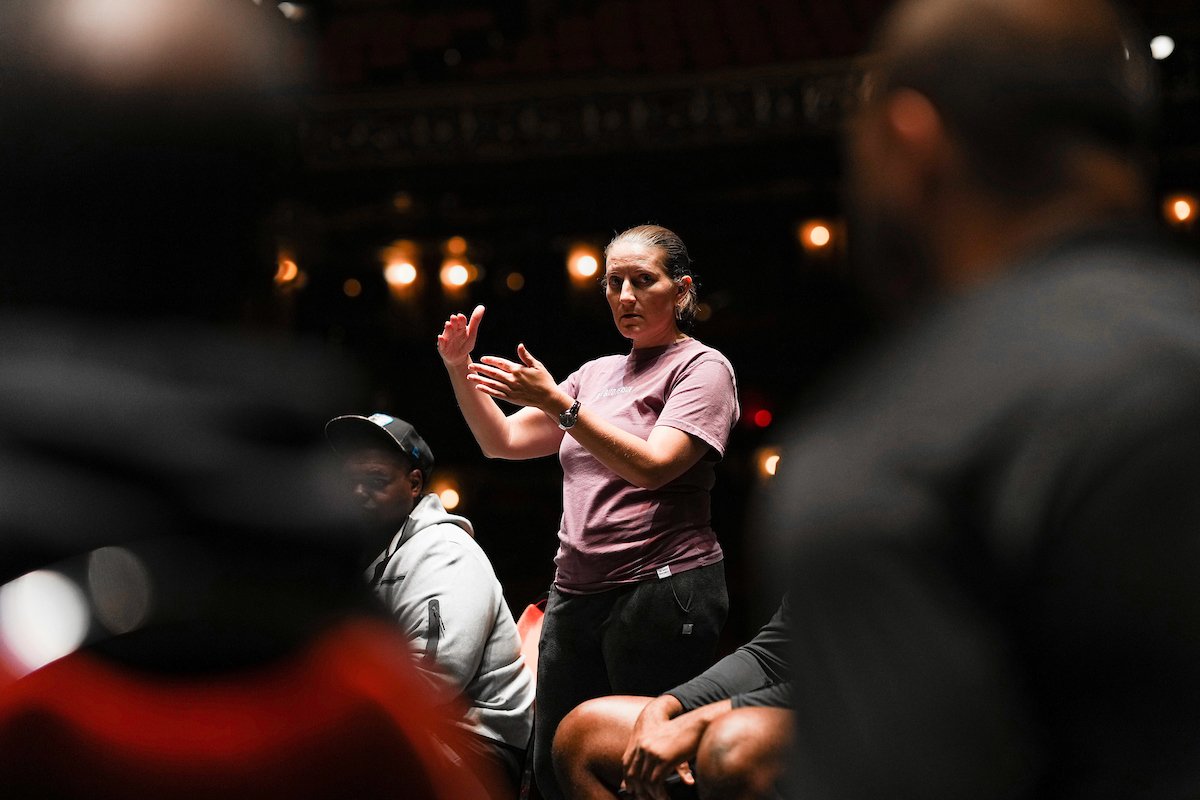
Lainie Hodges explaining an exercise to players seated on a theater stage.

The record

Seventeen NFL clubs since 2016.

17NFL clubs, starting with Baltimore in 2016

10straight years with Seattle, every rookie class since 2017

6clubs that added family or staff work after starting with rookies

  • Atlanta Falcons
  • Baltimore Ravens
  • Cleveland Browns
  • Denver Broncos
  • Detroit Lions
  • Green Bay Packers
  • Indianapolis Colts
  • Jacksonville Jaguars
  • Kansas City Chiefs
  • Las Vegas Raiders
  • Los Angeles Chargers
  • Los Angeles Rams
  • Miami Dolphins
  • New York Giants
  • New York Jets
  • Seattle Seahawks
  • Washington Commanders

The method is not football specific. It has also run with NASCAR, the NBA G League, and a range of sports within high school and collegiate ranks.

More about our approach

The argument

Development is not a solo event.

An organization is a few hundred people who have to work with each other under pressure, on a schedule none of them set. Players are only part of it. Significant others and parents absorb the same relocation and the same scrutiny. Coaches manage many personalities while managing their own careers. The business side runs a company that happens to have a team attached to it.

Most programming treats those as separate problems handled by separate budgets. The underlying skill is the same one, which is why the same session works in all four rooms, and why the clubs that start with one group tend to come back for another.

Who this is for

Six groups, one method.

Rookies

The transition year. Moving into a new level of competition means learning a new environment: finding your place on a team, asking for help, handling attention you did not ask for, and building trust quickly with people you may have just met.

These sessions give athletes a chance to practice the human side of that transition. Communicating clearly, reading the room, adapting to new expectations, and finding confidence without having to pretend they have everything figured out.

Designed to fit within a club’s rookie transition program, or as a standalone session during preseason, training camp, or the start of a new competitive season.

60 to 90 minutes
Veterans

The next chapter. Taking on leadership while still being one of the group, giving feedback that people can hear, supporting newer athletes without taking over, and thinking about what life might look like beyond competition. These are transitions that call for a different kind of support.

Sessions are typically designed for smaller groups and allow more time for reflection, conversation, and practice than the introductory transition work. They can be tailored to the realities of a particular sport, team, or stage of an athlete’s career.

30 to 90 minutes · 4 to 25 people

Whole Teams

Everyone in one room. Rookies and veterans in the same session is different work from either group on its own, because the distance a team actually has to close is usually between those groups rather than inside them.

Newer athletes find out that the people leading them were once exactly where they are. Veterans get to see the group they are leading rather than hearing about them secondhand. Both of those are hard to arrange on purpose and easy to arrange in a session.

Built for a full roster or a full position group, and most useful when a team is forming, rebuilding after turnover, or going into a season with a lot of new faces.

60 minutes to half day · full roster or position group

Significant Others & Families

The people around the athlete. An athlete’s journey does not happen in isolation. Partners, parents, family members, and close friends are often adapting alongside them, sometimes without much context for what is normal, what is coming next, or how to support someone whose life is changing quickly.

These sessions bring the people living that experience together. They create space to connect with others who understand the particular rhythms of an athlete’s life, share what they are learning, and build relationships that make the journey feel a little less unfamiliar.

Designed for family weekends, season kickoffs, couples retreats, and other moments when the people around the athlete have a chance to find each other, not just as guests, but as part of the same community.

30 minutes to multi-day

Coaching Staff

For coaches. Communicating across generations, giving feedback that athletes can actually use, navigating different personalities, and reading a room when the room is full. Coaching asks people to make hundreds of small adjustments in real time, often with very little room to rehearse them. These sessions give coaches a chance to step outside the usual coaching environment and practice some of those same skills from a different angle.

60 minutes to half day · position groups or full staff

Business & Front Office

The other hundred and fifty people in the organization. Marketing, community engagement, ticketing, alumni relations, and the cross-functional groups formed for one project and dissolved after it. Same method, different room, and the same problem of people who need to work together before they know each other.

60 minutes to a series · single department or cross-functional

In their words

What clubs and coaches say.

Their workshops rapidly remove walls that may exist between players, allowing the group to make connections and build relationships more quickly. We’ve incorporated more of Improv Alchemy’s services into our programming to support not only the athlete, but the entire group around them.
Mo Kelly and Connie CateVP of Player Engagement, and Director of Player and Family Services, Seattle Seahawks
Lainie has been integral to the Rookie Readiness Program since 2022. She allows our athletes to have an out of the box experience in a safe, creative environment, and beautifully fuses life skills through improv work.
Jessica GraySr. Director of Player Engagement, Detroit Lions
Their work helps players develop greater self-awareness and a strengthened ability to adapt when changes occur. The learning deepens the trust they have in their teammates, which sustains our championship culture.
Ramzee RobinsonFormer Director of Player Engagement, Kansas City Chiefs
Their workshops allow athletes to safely come out of their comfort zones and experience themselves, and each other, in a different way. Players tap into skills that allow them to adapt and adjust.
Jameel McClainDirector of Player Engagement, Baltimore Ravens
Their services have been crucial in helping our rookies with responsible decision-making. We also used them to support relationship and trust building at our Family Boot Camp.
Montelle Sanders and DeAngelo ShearsFormer Player Engagement, Las Vegas Raiders
I noticed an immediate difference in the way our team played. They were more connected and communicated better, which led to increased fluidity in their play.
Kenichi YatsuhashiFormer Head Coach, BMCC Soccer
It integrated new team members, built cohesion, and gave players a space for conversation around challenges. This was one of the most effective development activities we have ever done.
Dwayne “Tiny” MortonHead Coach, Boys Basketball, New York
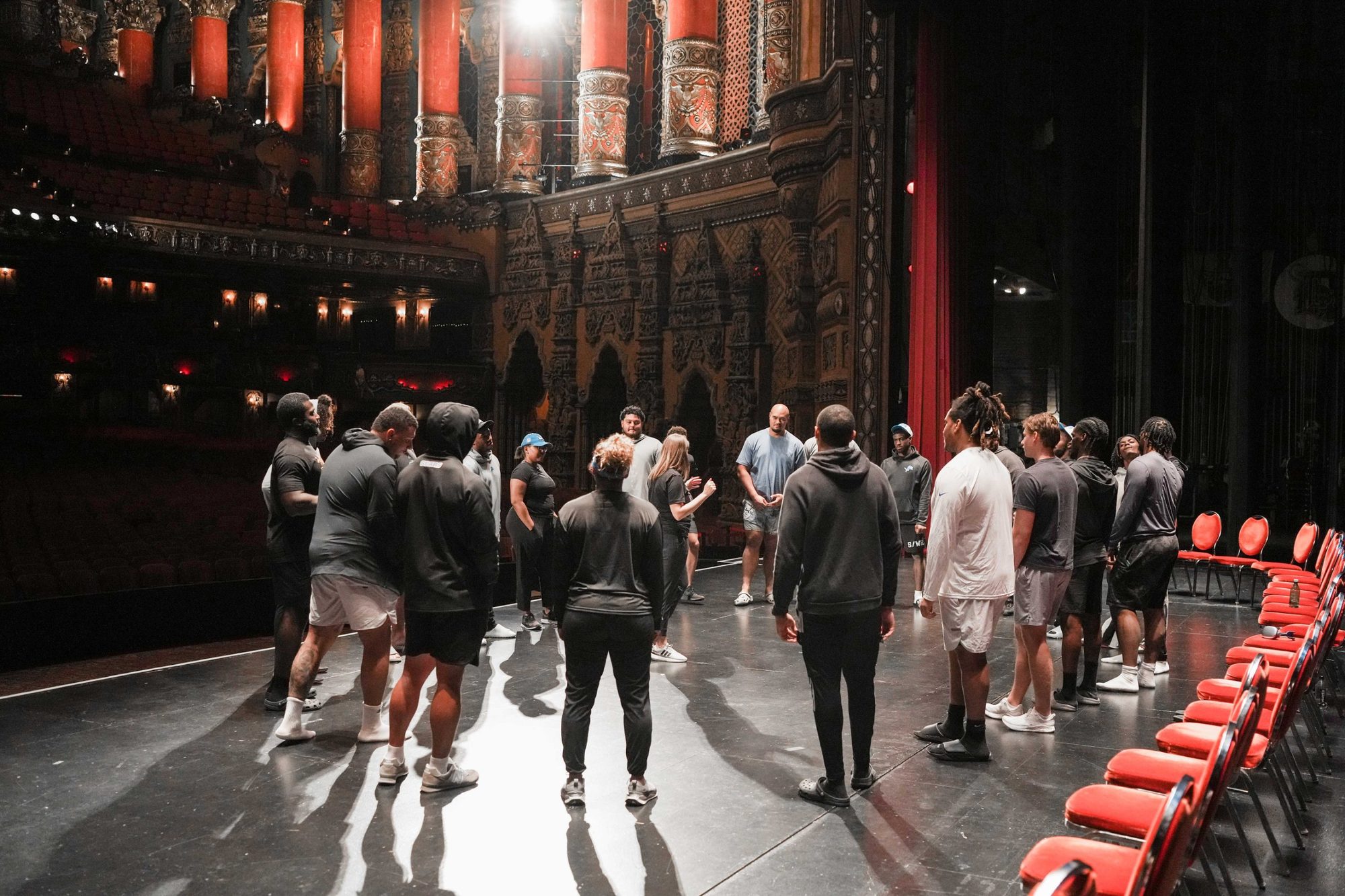
Players standing in a circle on a theater stage during a Rookie Development Lab, with Lainie Hodges leading.
Rookie Development Lab. Nobody performs, nobody is put on the spot, and everyone is in the exercise at the same time.

Across the year

Where this usually lands in your year.

Every sport runs on its own calendar, so these are moments rather than months. Most organizations bring us in at one of four. Several bring us in at more than one, which is when the work compounds.

  1. A new group comes together

    Transition and preseason

    A Development Lab inside a club’s transition program, or a standalone session at camp or the start of a competitive season. With Seattle we open the program and close it, so the group finishes where it started.

  2. The people around the athlete

    Family and partner programming

    Family weekends, season kickoffs, and significant others programming. These sessions are built for partners, parents, and families rather than for the athletes, so the people adapting alongside them get a room of their own.

  3. The calendar is full

    In-season sessions

    Shorter formats for athletes and for staff during the stretch when nobody has a full day. The session gets shorter rather than thinner.

  4. There is room to think

    Retreats and staff work

    Coaching staff sessions, team building for business departments, and wellness or couples retreats, booked when there is enough space in the schedule to do them properly.

Getting the brief right

What people ask for, and what we usually recommend.

None of these are a no. They are the adjustments that tend to make a session land harder, and they are the kind of thing worth talking through before anyone signs anything.

You might ask forWe would probably suggest

A team-building session for the rookie class.

That, plus a shorter follow-up six to eight weeks later. The first session builds the vocabulary. The second one is where they find out whether they actually use it.

Something fun for family weekend.

A session to connect family members coming from different backgrounds, locations, and experiences, so they can develop relationships that help in navigating their unique journey.

A speaker for our staff retreat.

A working session instead of a talk. A retreat is one of the few times a staff has the hours to practice something, and a keynote spends that time on listening.

An icebreaker to open the meeting.

A real session, not just a few games. The activities are only part of the work. The value comes from having enough time to notice what happens, reflect on it, and connect it back to how people actually work together. A short burst of games without that context can leave people wondering what the point was. We would rather give the experience enough room to be useful, relevant, and worth taking seriously.

Tell us about your team.

A brief phone call is usually enough to figure out what your people are working through and where in the year it makes sense to do something about it.

Let’s Talk