
Skip to content

HomeProgramsEducation

The work of school happens between people.

Students, teachers, counselors, and school leaders all play a different part in making a school work. We work with each of them, and while the setting may change from a classroom to a professional development day, the fundamentals remain remarkably consistent: listening, adapting, communicating, and finding ways to work well together.

Let’s Talk
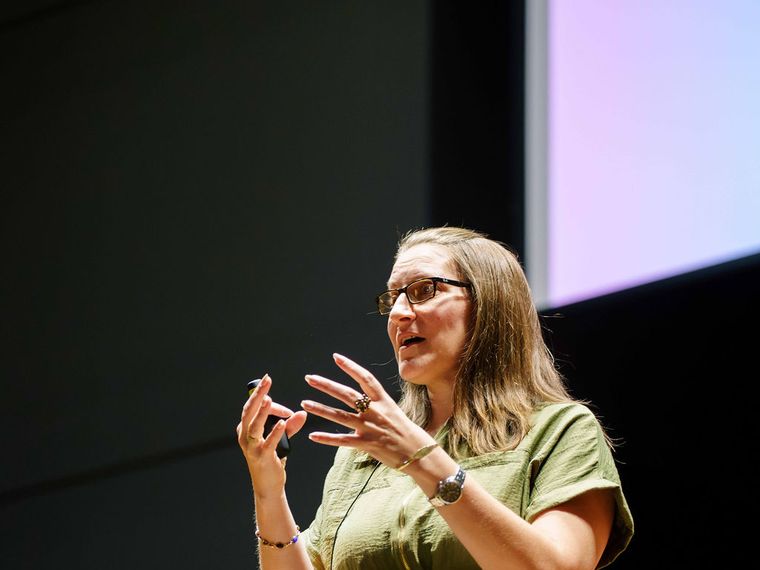
Lainie Hodges leading an exercise, demonstrating with her hands.

The grounding

This work started in education, not in sport.

  • Denver Public Schools
  • Bruce Randolph School
  • Manual MS
  • Manual HS
  • Montbello HS
  • Contemporary Learning Academy
  • Gilliam Youth Services
  • Colorado High School Charter
  • Florence Crittenton HS
  • Montclair Elementary
  • DCIS Fairmont
  • Summit Academy
  • DC-21
  • PREP Academy
  • Community College of Denver
  • University of Denver
  • Cherry Hills Elementary
  • Chappelow
More about our approach

The argument

Teaching is improvisation with a lesson plan attached.

A carefully planned lesson meets thirty different people, each arriving with their own questions, energy, and needs. A staff meeting takes an unexpected turn. A parent conversation becomes more complicated than anyone anticipated. School professionals spend much of their day responding thoughtfully to moments they could never have scripted in advance.

These sessions create space to practice that kind of adaptability. Teachers can experiment with reading a room, adjusting in the moment, and finding a new way forward when a lesson does not go as planned. Administrators can practice communicating something difficult while keeping people connected and engaged. Students can practice speaking up, listening to one another, and discovering that being wrong in front of their peers is something they can recover from.

It is not about adding another skill to an already demanding profession. It is about giving the people who navigate uncertainty every day a chance to practice it together.

Who this is for

Four groups in the same building.

Students

Classroom sessions and multi-week residencies built with a teacher rather than dropped on top of their plan. The work is on speaking up, listening to someone you did not choose to work with, and recovering when something does not go the way you expected in front of people.

Single class to a multi-week residency
Teachers

Professional development that people actually participate in. New-staff onboarding, department teams, and the mid-year sessions that exist because February is hard. Teachers improvise all day already, so the session usually lands as naming something they were doing by instinct.

Half day to a full PD day · department or whole staff

Administrators & Leadership

Principals, assistant principals, and district teams. Giving feedback that a teacher can use, running a meeting where people say the real thing, and holding a room during a year that keeps changing shape. Usually a smaller group and a longer session.

Half day · 4 to 50 people

Higher Education

Students first. At the Community College of Denver we worked with a program that supports students through the parts of college nobody puts on a syllabus. The same sessions run for faculty, student affairs staff, orientation teams, and the residence life groups who spend a year building community out of strangers.

Single session through a series · faculty, staff, or students

In their words

What the people who run these buildings say.

The games and exercises safely took me out of my comfort zone, and I was pleasantly surprised by how quickly they brought down the walls, allowing us to speak frankly and honestly about our work. I absolutely believe all leaders can benefit from this type of workshop.
Cesar CedilloOperational Superintendent, Denver Public Schools
The personal reflection I experienced about my leadership and communication strengths and areas for growth immediately impacted my work. I found it directly applicable to my role as a leader.
Jessica LongFormer Principal, Manual Middle School
Her methodology allows for authentic sharing of students’ struggles, goals, and dreams so they can see they are not alone in their challenges. I can’t speak enough to how this helped them bond and build bridges together.
Kendrick FriendlyFormer Director, Center for Special Programs, Community College of Denver
Students who are generally more quiet during class discussions and share outs now have shown more confidence when speaking.
Melodie KossTeacher, Bruce Randolph School
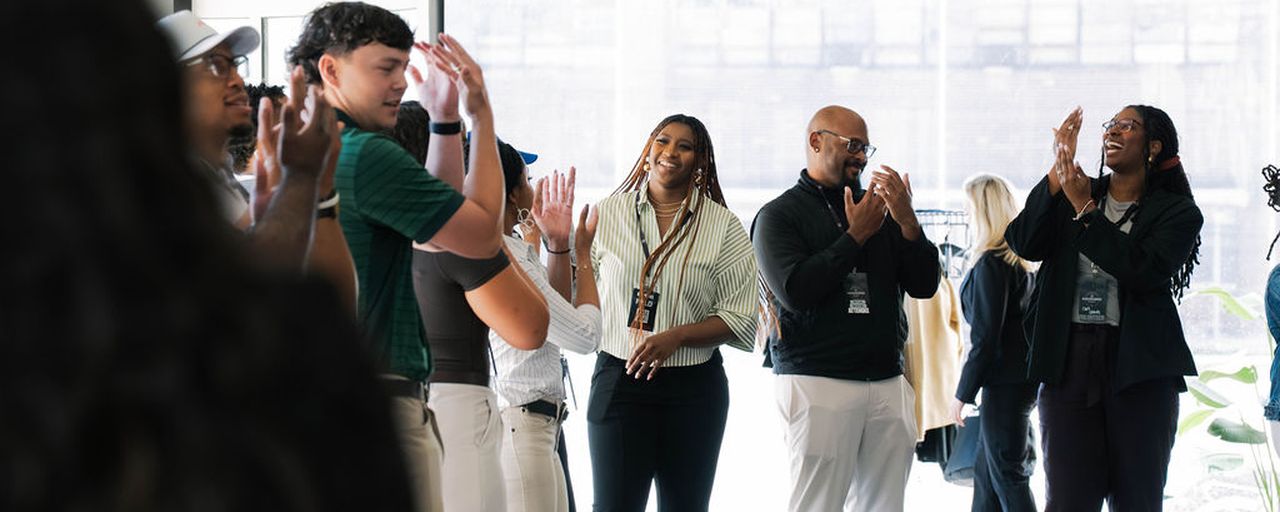
Participants clapping and laughing during an exercise.
A staff development session in progress.

The school year

Where this usually lands on your calendar.

Schools tend to book at one of four points, and the point matters more here than it does anywhere else we work.

  1. August

    Before students arrive

    Staff development days and new-teacher onboarding, while there is still time for a staff to become a staff rather than a roster.

  2. Fall

    In the classroom

    Residencies and programs that run alongside the curriculum, built with the teacher whose room it is.

  3. Winter

    The long middle

    The stretch where morale dips and nobody has a full day. Shorter sessions built for a staff that is tired rather than fresh.

  4. Spring

    Transitions and planning

    Graduating classes, students moving up a building, and leadership teams planning a year they cannot fully predict.

Getting the brief right

What schools ask for, and what we usually recommend.

None of these are a no. They are the adjustments that tend to make a session work, and they are worth talking through before anything is scheduled.

You might ask forWe would probably suggest

An assembly for the whole school.

One grade, or one class. This work needs people close enough to hear each other and near enough to take a risk. An auditorium removes both.

An icebreaker to open the first staff day.

A full session in place of the warm-up, built around whatever the staff is carrying into the year. An icebreaker gets a room talking for ten minutes. A session gives them a way to talk about where they are at and where they would like to go.

A one-off workshop for students.

Three or four sessions can make a meaningful difference, even when they are short. Students often need a little time to get comfortable with a new person, understand the environment, and discover that it is safe to take a small risk in front of their classmates. The first session is often about creating that foundation. The sessions that follow give them a chance to build on it.

Something for our leadership team.

The same kind of session can be especially valuable when it happens before the year begins, rather than in response to a challenge later on. When a team is already navigating tension, some of the work naturally goes toward understanding and repairing what has become difficult. When that foundation is built early, the time can instead go toward developing the habits, trust, and shared understanding that help a team work well together from the start.

Tell us about your school.

A brief phone call is usually enough to work out who in the building would benefit most and where in the year it makes sense to do it.

Let’s Talk