Skip to content

HomeProgramsCorporate Teams

A team is not the same thing as a group of people who share a calendar.

Companies, city agencies, nonprofits, and fellowship programs all book these sessions. Most teams know each other’s names, job titles, and almost nothing about how each other thinks under pressure. That gap is what these sessions close, and it closes faster through doing something than through talking about it.

Let’s Talk
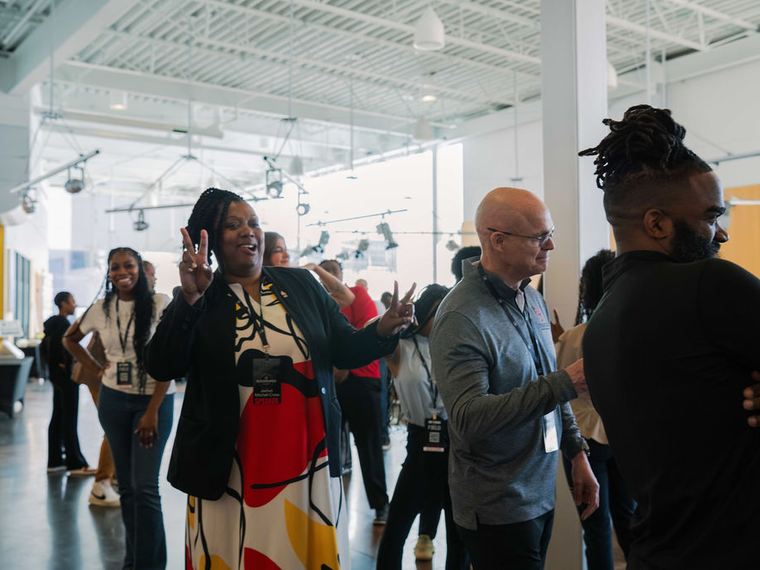
Colleagues working in pairs during a team development session in an office.

The record

Consultancies, adtech, city government, founder-led teams, and a football club.

  • Guidehouse
  • Prologis
  • SpotX
  • Think Global Institute
  • VintageView Wine Storage Systems
  • Task Force 12
  • Mandela Fellows
  • City of Denver Office of Children’s Affairs
  • ERO Resources
  • Focused Cloud
  • Seattle Seahawks Marketing Department
  • Seattle Seahawks Community Engagement and Legends Department
More about our approach

The argument

Most teams that call us are not broken.

The teams we work with are often highly capable, experienced people who know their roles and work well together. What can be harder to see is how differently people think, communicate, and respond under pressure or when plans change.

Even teams that have worked together for years can discover that they do not always have a shared understanding of how one another approaches uncertainty, decisions, and change. That is where new possibilities for stronger collaboration can emerge.

The sessions focus on a few practical things that can make a real difference in how people work together: hearing what a colleague actually said, rather than what you expected to hear; staying constructive when the plan changes halfway through; and discovering that being wrong in front of your colleagues can be a safe, useful part of working well together. There is room for curiosity, skepticism, and everything in between.

Who this is for

Four kinds of groups.

Intact Teams

A department can work together every day and still develop patterns that no one consciously chose. Some voices naturally carry more of the conversation, others may have less space to contribute, and important decisions can sometimes take shape in the five minutes after the meeting ends. The sessions make those patterns easier to see, without blame or finger-pointing. Once a team can notice how it works together, it has more choices about what to keep, what to change, and how to make better use of everyone around the table.

Half day · 4 to 50 people
Cross-Functional Groups

People brought together from different parts of an organization for a shared project, often with little history of working together. They have to find ways to communicate, make decisions, and build trust quickly. These teams often have the most to gain from creating that foundation early. A little shared experience at the start can save months of figuring out each other’s working styles along the way, and help the project get moving with greater clarity and confidence.

Half day to a series · project or task-force teams

Leadership Teams

Smaller rooms, higher stakes, and the particular problem of a group where everyone is used to being the most senior person present. The work is on disagreeing productively and on noticing when the room has stopped saying what it thinks.

Half day · 4 to 20 people

Sports & Entertainment Organizations

The business side of clubs, venues, and agencies. Marketing, community engagement, partnerships, ticketing, and alumni relations. We know this world from the inside, which shortens the part of the conversation where a vendor usually has to be taught how the building works.

Half day to a series · single department or cross-functional

In their words

What Improv Alchemy’s clients say.

Lainie did a terrific job tailoring improv content to my team’s needs, giving us practice at reading the room, hearing the offer, and building a virtuous cycle.
Cameron HuntDirector, Guidehouse
Having collaborated with Improv Alchemy in Football Operations, I recognized their tailored facilitation was ideal for onboarding and team bonding in my role leading Seahawks Community Engagement and Legends. Lainie skillfully fostered collaboration, encouraged team members to showcase their personalities, and boosted communication through effective training exercises.
Mario BaileyVP of Community Engagement and Legends, Seattle Seahawks
Lainie created a safe space for our team to discuss not only our individual needs but ours as a team. We are able to work better together now because we understand each other on a deeper level.
Amy ScerraCo-founder and COO, Think Global Institute
It renewed our energy and established deeper relationships between team members who had been working together a long time. We will definitely use her again.
Charles MalekCEO, VintageView Wine Storage Systems
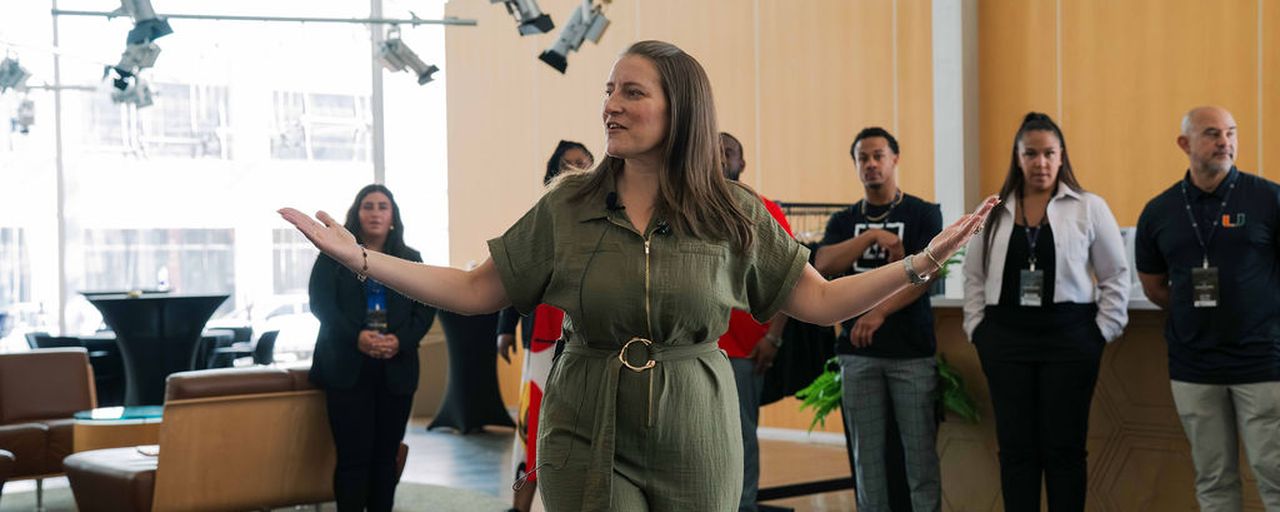
Lainie Hodges leading a group with her arms open.

The trigger

When teams usually call.

Corporate groups do not run on a season, so the useful question is not what month it is. It is what just happened, or what is about to.

A new team is coming together. A project is entering a critical phase. Roles or responsibilities are shifting. A familiar way of working no longer fits what the organization needs next.

Those moments can be a good time to bring people together, before new challenges become new habits.

  1. A team just changed shape

    Reorgs and new managers

    People who used to report elsewhere, a manager who inherited a group, or two teams merged on a slide. The habits have not formed yet, which is the easiest moment to influence them.

  2. Strangers have to deliver

    New project groups

    A cross-functional team with a deadline and no shared history. Getting them past politeness early is worth more than any kickoff deck.

  3. Everyone is finally in one place

    Offsites and all-hands

    For distributed teams this is often the only day of the year the whole group is in a room. Spending it on presentations wastes the one thing the day offers.

  4. Something hard just ended

    After a difficult stretch

    Post-launch, post-crunch, or after a year that took something out of people. Sessions here are less about building skills and more about a group re-establishing that it likes working together.

Getting the brief right

What companies ask for, and what we usually recommend.

None of these are a no. They are the adjustments that tend to make a session work, and they are worth settling before anything is booked.

You might ask forWe would probably suggest

Something fun for the offsite.

A session built around a real question the team is sitting on, which will also be fun. Entertainment is easy to book and forgotten by the drive home. If the day is the only time everyone is together, spend it on something they will still be referring to long after the session ends.

Team building for a group that is experiencing challenges.

A conversation with you first. Improv can be a powerful way to build trust, curiosity, and new ways of working together, but it is not the right tool for every situation. If a team is navigating a significant conflict or a specific unresolved issue, it is worth understanding that context before we begin. Sometimes a different kind of support will be more useful, and we will be honest with you about that. The goal is to offer something that genuinely helps, rather than to put a playful session on top of a challenge that needs a different kind of attention.

A workshop on communication skills.

The same slot, with a sharper focus. Communication is rarely one thing. It’s listening, timing, tone, clarity, reading what isn’t being said, knowing when to speak, and adjusting to the person in front of you. A session that tries to cover everything can leave people with a lot of ideas and very little that changes. We’d rather understand where communication is getting difficult for your group and spend the time working on that.

Can this run over video?

Some of it, and we will tell you which parts do not survive the format. Exercises that depend on reading a room lose most of what makes them work on a grid of faces. For a distributed team we would rather do a shorter in-person session once than a longer remote one quarterly.

Tell us about your group.

A brief phone call is usually enough to work out what the group is actually stuck on and whether a session is the right instrument for it.

Let’s Talk